FCLE Test Bank
The Florida Civic Literacy Exam (FCLE) is an essential assessment for many students aiming to demonstrate their understanding of civic literacy within the state of Florida. To aid students in their preparation, the FCLE Study Guide with Practice Tests provides a comprehensive resource designed to enhance learning and boost confidence. This article delves into the various components of the study guide, highlighting its features, benefits, and offering strategic tips for effective preparation.
Comprehensive Overview of the FCLE Study Guide
The FCLE Study Guide is meticulously crafted to cover all the critical areas of civic literacy that are tested in the exam. It offers a thorough exploration of fundamental topics such as the principles of American democracy, the U.S. Constitution, federalism, and individual rights. Each section of the guide is designed to build a solid foundation of knowledge, ensuring that students have a complete understanding of the material.
In addition to covering the core content, the study guide incorporates a variety of learning tools to accommodate different learning styles. Charts, diagrams, and summaries are strategically included to provide visual learners with a clear representation of complex concepts. Meanwhile, detailed explanations and examples cater to those who benefit from a more narrative approach to learning.
The guide is structured to facilitate progressive learning, beginning with basic concepts and advancing to more intricate topics. This logical flow helps students build on their existing knowledge and gradually deepen their understanding. By organizing the material in this way, the FCLE Study Guide ensures that students are well-prepared for every aspect of the exam.
Moreover, the guide is regularly updated to reflect any changes in the exam format or content. This commitment to accuracy and relevance guarantees that students are studying the most current information, which is critical for effective exam preparation.
Key Features and Benefits of the FCLE Guide
One of the standout features of the FCLE Study Guide is its user-friendly design. The material is presented in a clear, concise manner, making it accessible to learners of all levels. Each chapter is accompanied by key points and summaries, helping students to focus on the most important information without feeling overwhelmed.
Another significant benefit of the guide is its inclusion of real-world examples and case studies. These examples provide context to the theoretical knowledge, allowing students to see how civic principles are applied in everyday situations. This practical approach not only aids in comprehension but also helps students retain information more effectively.
The FCLE Study Guide also includes a variety of self-assessment tools, such as quizzes and review questions, at the end of each section. These tools enable students to evaluate their understanding and identify areas where they may need further study. This targeted approach to learning ensures that preparation is both efficient and effective.
Additionally, the guide offers valuable test-taking strategies specifically tailored for the FCLE. These strategies include time management tips, techniques for approaching multiple-choice questions, and methods for eliminating incorrect answers. By equipping students with these skills, the guide helps to reduce exam anxiety and increase confidence.
Practice Tests for Effective FCLE Preparation
Practice tests are a crucial component of the FCLE Study Guide, providing students with an opportunity to apply what they have learned in a simulated exam environment. These tests are designed to mimic the format and difficulty level of the actual FCLE, offering students a realistic preview of what to expect on exam day.
Each practice test comes with a detailed answer key and explanations for each question. This feedback is invaluable, as it not only helps students understand why a particular answer is correct but also reinforces the underlying concepts. By reviewing these explanations, students can gain a deeper insight into the material and address any misconceptions.
The practice tests also serve as a diagnostic tool, allowing students to identify their strengths and weaknesses. By pinpointing specific areas that require further study, students can tailor their preparation to focus on these topics, thereby maximizing their study efficiency.
Moreover, taking practice tests under timed conditions can help students develop effective time management skills. This experience teaches students how to pace themselves during the exam, ensuring that they have enough time to carefully read and answer each question.
Showing the single result
-
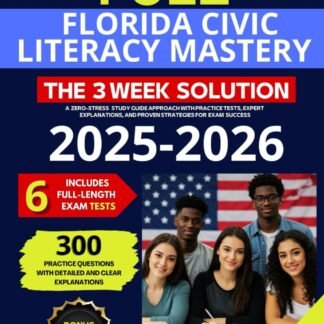
FCLE Florida Civic Literacy Exam Test Bank Download
Sale! Original price was: $65.00.$27.00Current price is: $27.00. Add to cart
Showing the single result